Real estate website design is one of the most important investments a property business can make in 2026. Whether you are a real estate agent, a property developer, or a large brokerage firm, your website is often the very first impression potential clients get of your business. Therefore, a poorly designed website can cost you leads, clients, and ultimately revenue. On the other hand, a well-designed real estate website builds trust, generates qualified leads, and helps you stand out in a highly competitive market.
At Web Dream Agency, we specialize in creating professional, high-converting websites for businesses around the world — including real estate companies. In this complete guide, we will walk you through everything you need to know about real estate website design: from must-have features and design best practices to SEO tips and mobile optimization strategies.
So, if you are ready to take your property business to the next level, keep reading.
Why Real Estate Website Design Matters More Than Ever
The real estate industry has shifted dramatically online over the past decade. According to the National Association of Realtors (NAR), over 97% of homebuyers use the internet during their property search. This means that if your website is outdated, slow, or difficult to navigate, you are almost certainly losing potential clients to competitors who have invested in a better online experience.
Furthermore, a strong real estate website design does much more than just look good. It guides visitors through a clear journey — from discovering your listings to contacting your team. As a result, good design directly impacts your conversion rates and bottom line.
Here are a few key reasons why professional real estate website design matters:
- First impressions count: Visitors decide within seconds whether to stay on your site or leave. A modern, clean design builds immediate credibility.
- Lead generation: Strategic placement of contact forms, call-to-action buttons, and property search tools can significantly increase inquiries.
- SEO performance: A well-structured website ranks higher on Google, bringing in organic traffic without paid advertising costs.
- Mobile experience: Most property searches happen on smartphones. A mobile-friendly design ensures you never miss a potential buyer.
- Brand trust: A professional website signals that you are a legitimate, established business — which is especially important in high-value transactions like real estate.
In short, investing in quality real estate website design is not optional — it is essential for growth.
Key Features Every Real Estate Website Must Have
Not all websites are created equal. When it comes to real estate website design, there are several non-negotiable features that every property site should include. Let’s break them down one by one.
1. Advanced Property Search Functionality
The most critical feature of any real estate website is a powerful property search tool. Visitors come to your site with specific needs — they want to filter properties by location, price range, number of bedrooms, property type, and more. Therefore, your search functionality must be fast, intuitive, and easy to use.
Additionally, map-based search is becoming increasingly popular. When users can visually explore properties on an interactive map, they stay on your site longer and engage more deeply with your listings. Tools like Google Maps API can be integrated directly into your property listings for a seamless experience.
2. High-Quality Property Listings
Each property listing should function almost like a mini landing page. This means you need high-resolution photos, detailed descriptions, key property details (square footage, amenities, year built), virtual tour links, and clear contact options. Moreover, well-written listing descriptions that include relevant keywords can also help individual property pages rank on Google — giving you extra SEO value.
3. Clear Calls-to-Action (CTAs)
A real estate website without strong calls-to-action is a missed opportunity. Every page should guide visitors toward a specific next step — whether that is scheduling a viewing, downloading a property brochure, or simply calling your office. Buttons like “Book a Free Consultation,” “View Available Properties,” or “Get a Free Valuation” are highly effective in encouraging engagement.
4. Agent or Team Profiles
People buy from people they trust. Including detailed agent profiles — with professional photos, bios, years of experience, and contact details — humanizes your brand and builds credibility. In fact, personalizing your team page can significantly increase the number of direct inquiries you receive.
5. Testimonials and Social Proof
Client reviews and success stories are powerful trust signals. Featuring testimonials prominently on your homepage and service pages reassures potential clients that you deliver results. If possible, include video testimonials or link to your Google Business reviews, as these carry even more weight.
6. Blog and Educational Content
A regularly updated blog is one of the best ways to drive organic traffic to your real estate website. By publishing helpful articles about the buying process, market trends, neighborhood guides, and investment tips, you position yourself as an authority in your field. Additionally, fresh content signals to Google that your website is active and relevant — which can boost your overall search rankings.
Real Estate Website Design Best Practices
Now that we have covered the essential features, let us explore the design principles that separate good real estate websites from truly great ones. These best practices will help you create a site that not only looks impressive but also performs exceptionally well.
Keep the Design Clean and Professional
In real estate, less is often more. A cluttered, busy design can overwhelm visitors and make it difficult to find the information they need. Instead, focus on clean layouts with plenty of white space, a consistent color palette, and clear typography. This approach creates a premium feel that aligns with the high-value nature of property transactions.
Moreover, your color scheme should reflect your brand identity. Luxury property businesses, for example, often use deep navy blues, golds, or charcoal tones to convey sophistication. Meanwhile, local agents might opt for warmer, friendlier tones to appear approachable and community-focused.
Prioritize Fast Loading Speeds
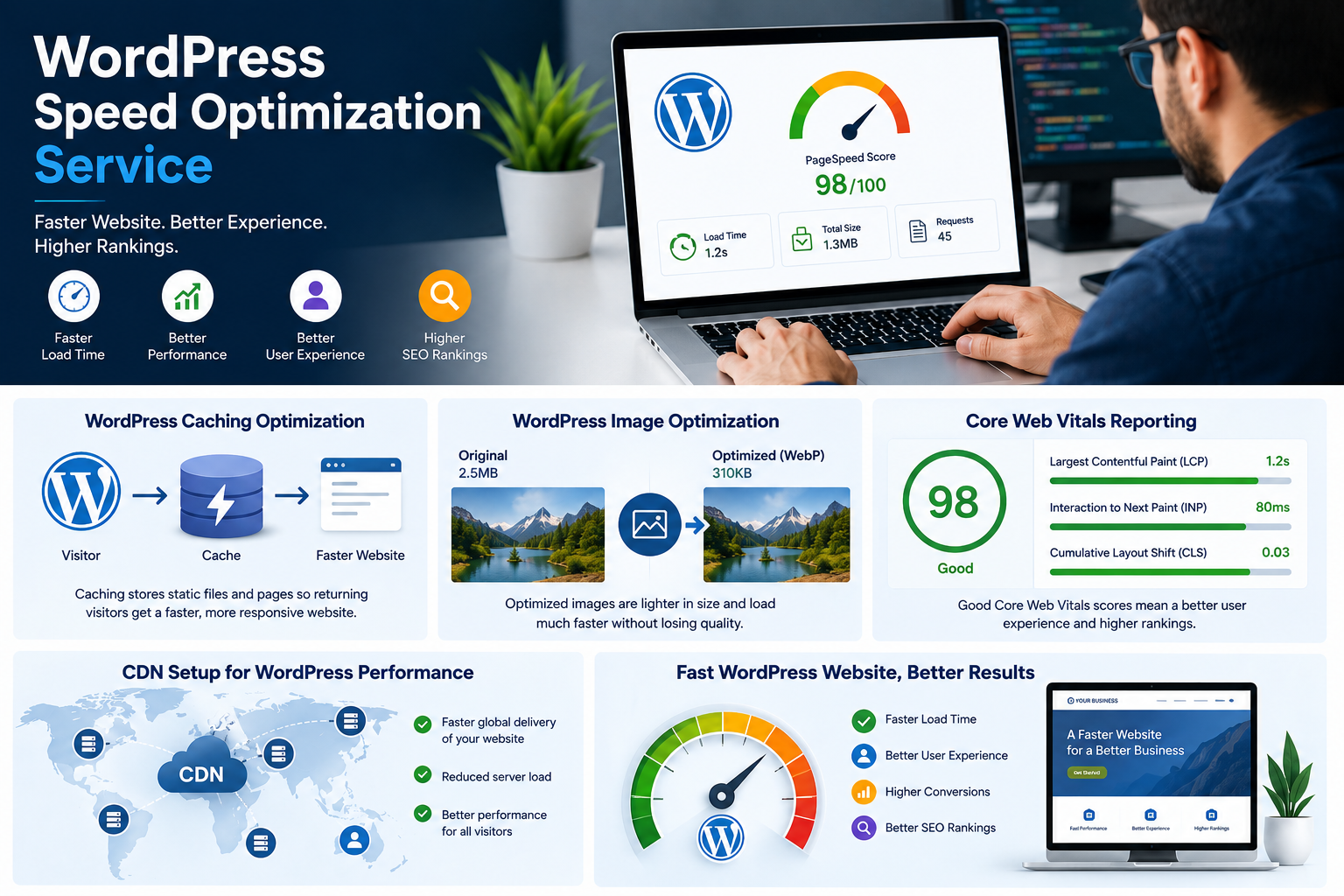
Website speed is not just a user experience issue — it is also a major SEO ranking factor. According to Google’s research on page speed, a one-second delay in page load time can reduce conversions by up to 7%. Therefore, your real estate website must be optimized for speed.
To improve loading times, consider compressing image files, using a content delivery network (CDN), enabling browser caching, and choosing a high-performance hosting provider. At Web Dream Agency, we implement all of these optimizations as part of our standard website development process.
Design for Mobile First
As mentioned earlier, the majority of property searches now happen on mobile devices. Consequently, a mobile-first design approach is absolutely essential. This means designing your site with small screens in mind first, then scaling up to tablet and desktop layouts.
Key mobile design considerations for real estate websites include touch-friendly navigation menus, large and easy-to-tap buttons, simplified search forms, and fast-loading compressed images. A seamless mobile experience not only improves user satisfaction but also boosts your rankings on Google, since the search engine uses mobile-first indexing.
Use Professional Photography and Video
Real estate is an inherently visual industry. Therefore, the quality of your images can make or break a visitor’s first impression. Invest in professional photography for both your property listings and your main website pages. Additionally, incorporating video content — such as property walkthroughs, neighborhood tours, or agent introduction videos — can dramatically increase engagement and time spent on your site.
Build Trust with Certifications and Affiliations
Displaying logos of industry associations, certifications, and professional memberships adds an important layer of credibility to your real estate website. Whether you are a member of a national realtors’ association or have won industry awards, featuring these prominently — especially near your CTAs — can improve conversion rates.
SEO for Real Estate Website Design: Ranking Higher on Google
A beautifully designed real estate website is only valuable if people can actually find it. This is where search engine optimization (SEO) comes in. Good real estate website design and strong SEO go hand in hand — and getting both right can deliver a consistent stream of organic leads for years to come.
Keyword Research and Targeting
Effective SEO starts with understanding what your target audience is searching for. For a real estate business, this might include keywords like “homes for sale in [city],” “real estate agents near me,” “luxury property listings,” or “first-time buyer guide.” By incorporating these terms naturally throughout your website content — in headings, body text, meta descriptions, and image alt text — you increase the likelihood of ranking for these searches.
Furthermore, long-tail keywords (more specific search phrases) are especially valuable for real estate SEO. They typically have lower competition and higher conversion intent, meaning people who find you through these searches are often ready to take action.
On-Page SEO Optimization
Every page on your real estate website should be optimized for a specific target keyword. This includes writing compelling, keyword-rich title tags and meta descriptions, using H1 and H2 headings strategically, adding descriptive alt text to all images, and creating clean, keyword-rich URL slugs.
For example, a property listing page for a two-bedroom apartment in New York might have a URL like /properties/2-bedroom-apartment-new-york rather than something generic like /listing?id=1234. These small details add up and collectively have a significant impact on your search rankings.
Local SEO for Real Estate
For most real estate businesses, local SEO is particularly important. Potential buyers and sellers are searching for agents and properties in specific locations. Therefore, your website should include location-specific landing pages, locally relevant content, and a fully optimized Google Business Profile.
Additionally, earning backlinks from local news sites, community blogs, and business directories can significantly boost your local search visibility. The more Google sees your website referenced by other reputable local sources, the higher it will rank for location-based searches.
Technical SEO Fundamentals
Beyond content, the technical foundation of your real estate website design plays a crucial role in SEO performance. Key technical factors include having an SSL certificate (HTTPS), submitting an XML sitemap to Google Search Console, fixing broken links and 404 errors, using structured data markup for property listings, and ensuring your site has a clean, crawlable code structure.
At Web Dream Agency, we handle all of these technical SEO elements as part of our website design and development services, ensuring your site is built on a solid, search-engine-friendly foundation from day one.
The Role of UX in Real Estate Website Design
User experience (UX) is the backbone of effective real estate website design. Even if your site looks stunning, if visitors struggle to find what they need, they will leave — often for good. Therefore, every design decision should be made with the user’s journey in mind.
Intuitive Navigation
Your website navigation should be simple, logical, and consistent across all pages. Main menu items might include: Home, Properties, About Us, Services, Blog, and Contact. Avoid overwhelming visitors with too many menu options. Instead, use dropdown menus strategically to organize content into clear categories without cluttering the main navigation bar.
Strategic Use of White Space
White space — the empty space around design elements — is one of the most underutilized tools in web design. It makes content easier to read, helps important elements stand out, and creates a sense of quality and sophistication. Luxury real estate websites, in particular, use generous white space to create a premium, editorial feel.
Accessible Design
Accessibility is not just a legal consideration — it is also good business practice. Designing your real estate website to be accessible to people with disabilities (including those who use screen readers or have visual impairments) broadens your potential audience and improves your overall user experience. Key accessibility considerations include sufficient color contrast, descriptive alt text for images, keyboard-navigable menus, and captions for video content.
How Web Dream Agency Approaches Real Estate Website Design
At Web Dream Agency, we take a comprehensive, results-driven approach to real estate website design. Our process is designed to deliver websites that are not only visually impressive but also strategically optimized for lead generation and search engine performance.
Discovery and Strategy
We begin every project with an in-depth discovery session to understand your business goals, target audience, and competitive landscape. This allows us to create a customized design strategy that aligns with your brand and objectives — rather than using a generic, one-size-fits-all template.
Custom Design and Development
Our design team creates bespoke website designs tailored specifically to your real estate brand. We do not rely on off-the-shelf themes that look like every other agency’s work. Instead, we build custom layouts, unique visual elements, and purpose-built features that make your website truly stand out.
Furthermore, all of our websites are developed with clean, optimized code that ensures fast loading speeds and solid technical SEO foundations.
SEO and Content Optimization
We integrate SEO best practices throughout the design and development process — not as an afterthought. From keyword research and on-page optimization to technical SEO audits and structured data implementation, we ensure your real estate website is built to rank and convert from launch day.
Ongoing Support and Maintenance
A website is never truly finished. After launch, we provide ongoing support, performance monitoring, and regular updates to ensure your site continues to perform at its best. Whether you need new property pages added, design updates made, or SEO performance reviewed, our team is always available to help.
Ready to transform your real estate online presence? Contact Web Dream Agency today for a free consultation.
Real Estate Website Design Trends to Watch in 2025
The world of web design is constantly evolving. As a result, staying current with the latest trends can give your real estate website a significant competitive advantage. Here are some of the most important real estate website design trends shaping the industry in 2025.
AI-Powered Property Recommendations
Artificial intelligence is transforming the way property websites engage with visitors. AI-powered recommendation engines can analyze a user’s browsing behavior and suggest properties that match their preferences — creating a personalized, Netflix-style experience. This not only improves user engagement but also increases the likelihood of conversions.
Virtual and Augmented Reality Tours
3D virtual tours and augmented reality (AR) features are becoming increasingly common on premium real estate websites. These tools allow potential buyers to explore properties remotely — a game-changer for international buyers or those unable to visit in person. Integrating virtual tour technology into your real estate website design can significantly differentiate you from competitors still relying solely on static photos.
Minimalist, Content-First Layouts
Clean, minimalist designs that put content front and center are dominating the real estate web design space. Rather than relying on flashy animations or complex design elements, leading agencies are focusing on typography, white space, and high-quality imagery to create sophisticated, distraction-free user experiences.
Dark Mode Options
Dark mode is no longer just a tech trend — it is increasingly expected by users across all industries. Offering a dark mode option on your real estate website can improve readability in low-light conditions and give your brand a modern, premium feel.
Chatbots and Live Chat Integration
Integrating AI-powered chatbots or live chat functionality into your real estate website allows you to engage with visitors 24/7 — even outside business hours. Chatbots can answer common questions, qualify leads, and schedule viewings automatically, ensuring no potential client ever slips through the cracks.
Choosing the Right Web Design Agency for Your Real Estate Business
With so many web design agencies to choose from, finding the right partner for your real estate website design project can feel overwhelming. However, by focusing on a few key criteria, you can make a confident, informed decision.
Look for Real Estate Experience
Not all web designers understand the specific needs of the real estate industry. Look for an agency that has demonstrable experience designing websites for property businesses — ideally with a strong portfolio of real estate projects you can review.
Check Their SEO Capabilities
A great-looking website that ranks poorly on Google will not generate leads. Therefore, ensure the agency you choose has strong SEO expertise and can demonstrate results. Ask for case studies, ranking improvements, or organic traffic growth data from previous clients.
Assess Their Communication and Process
The website design process involves close collaboration between your team and the agency. A good agency should have a clear, transparent process, regular communication touchpoints, and the ability to explain technical decisions in plain language.
Consider Post-Launch Support
Your relationship with a web design agency should not end at launch. Ensure they offer ongoing maintenance, support, and the ability to make updates and improvements as your business grows and evolves.
At Web Dream Agency, we pride ourselves on all of the above. We bring deep real estate industry knowledge, proven SEO expertise, and a client-first approach to every project. View our portfolio to see some of our recent work, or get in touch to discuss your project today.
Final Thoughts on Real Estate Website Design
In today’s digital-first world, your real estate website is the cornerstone of your entire marketing strategy. Therefore, getting the design right is not just about aesthetics — it is about building a high-performing business asset that generates leads, builds trust, and drives growth consistently over time.
To summarize, here is what a winning real estate website design requires:
- Advanced, user-friendly property search functionality
- Professional photography and engaging visual content
- Mobile-first, responsive design across all devices
- Fast loading speeds and strong technical SEO foundations
- Clear calls-to-action and lead generation tools
- Locally optimized content and Google Business integration
- Ongoing updates, maintenance, and performance monitoring
Whether you are starting from scratch or looking to redesign an existing site, Web Dream Agency has the expertise and experience to deliver results. We combine creative design excellence with data-driven SEO strategy to create real estate websites that truly perform.
So, if you are ready to elevate your real estate business online, contact Web Dream Agency today and let’s build something extraordinary together.